
Resin Renaissance
It’s more than just clever alliteration, this thing I’ve come to call “my art” (as if it’s a thing I own). It’s a rebirth of someone else’s art or opinion or mood. I’ve been painting off and on for years. Usually it’s what I call “purpose painting” - creating a piece to fill a space. Sometimes I’ve created things that came from inside me. But usually painting was more utilitarian than that.
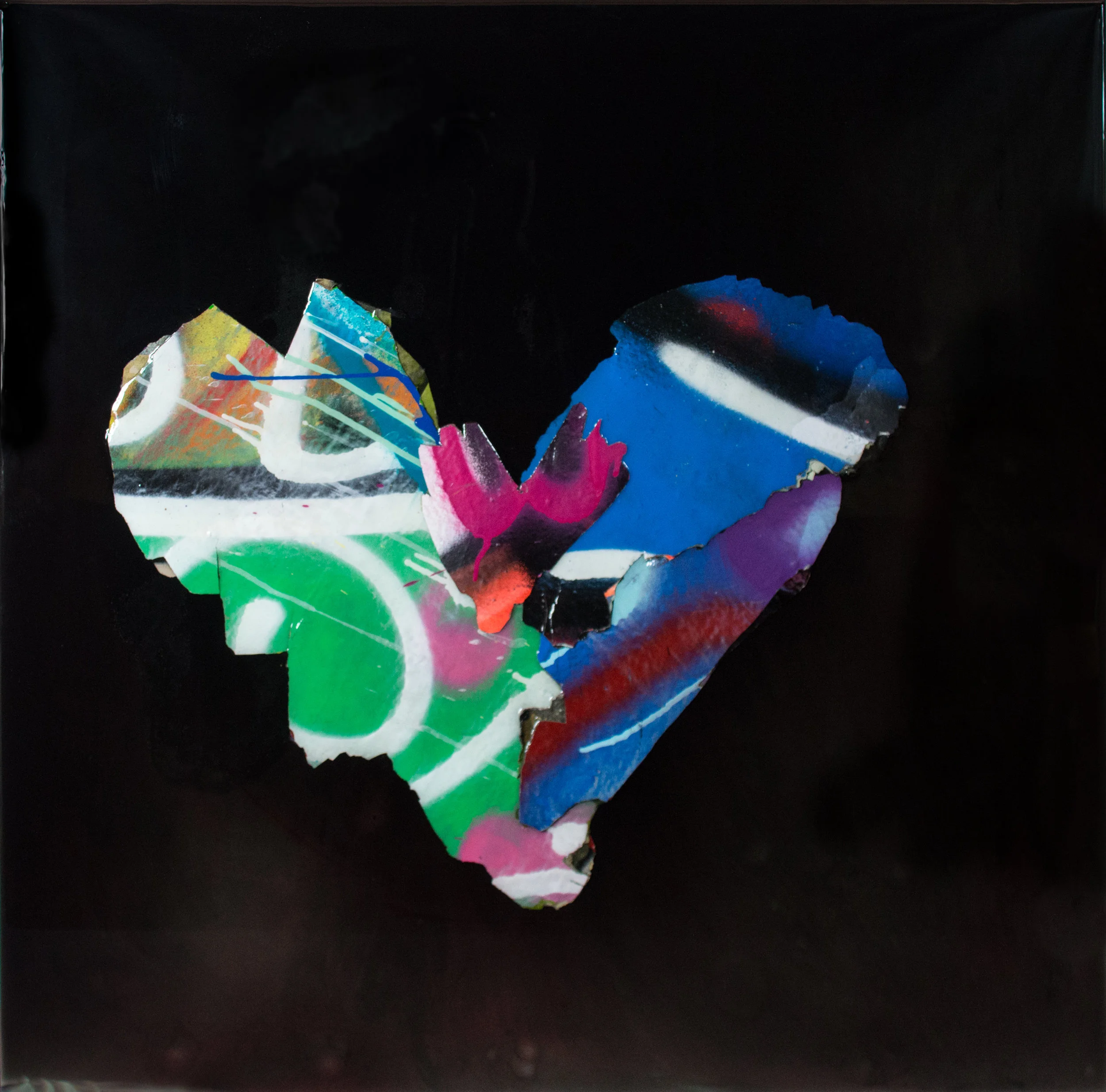
Then one day, with help from my cousin and her friend, I found my arms filled some objects that needed to be honored. Quite literally trash, these objects came from the ground of a nearby tunnel. Ripped from the walls of the tunnel by graffiti and street artists to clear a way for their own expression, these chips of the Krog Street Tunnel represent years of art upon art upon art. Some may see it as vandalism or blight. But I see it as rich history and culture. A combination of skill and vision.
It took all of two seconds to settle on a future for these chips: they should be floated in resin and given a new life...and an immortality. In hindsight it seems obvious. But I’d never worked with resin before and had a lot to learn. A few minutes of YouTube research told me that I could do this. How I would do it would unfold as I went. My first piece was born from whatever resin my local art store was selling. It was a satisfying, if not smelly and frustrating experience. But the result...a 30” x 30” piece...filled me with such a feeling of “home” that I knew I’d found my jam.
But this stuff is toxic. My brain cells were already diminished. If I were to do this as frequently as I wanted I needed to make an investment in a good respirator. While researching it all, I found ArtResin. From their website, it is: “certified non-toxic (when used as directed) so it's not bad for your health like other resins. No VOCs. No fumes. No solvents. No respirator needed. Non-flammable. Non-hazardous. Conforms to ASTM D4236 (Safe for Home Use).” Learn more about them at www.artresin.com or click "ArtResin" on the menu bar.
I did end up getting that respirator, because I do a lot of sanding and dremeling. But fortunately, during the initial pour, I don’t have to wear it which gives me the comfort to really focus on the nuances and details of this liquid-to-hard medium.
A local coffee shop agreed to let me hang/sell some of my art. All my pieces were on the small side, so, I asked my husband, who had laid claim to that original 30” x 30” piece if I could show it and what price it would have to command for him to sell it. I underestimated his attachment to the work when he said “it would have to be five figures”. So, I bought a new 30” x 30” board and started a new piece to anchor my Love Collection.
This time I tinted the resin. I purposely didn’t mix the tint in completely. I wanted variations. When i poured it, and started spreading it using the spreader I bought thru ArtResin, I was so pleased with the effect. It felt sexy and mysterious. Although the resin and hardener had been completely mixed before I added the tints, the first layer didn’t cure completely. Probably because of the liquid of the tints concentrating in certain areas. That would have been easy to deal with on its own because I pour in many layers. But, while curing, the cover I use to protect the piece from dust collapsed into the piece.
I decided quickly (aka Had No Choice) that I would just let that big chunk of cardboard inform the art in a different way than perhaps I originally intended. I sanded it off, used acrylics and tinted resin to patch it and called it “part of the art”.
There are other “imperfections” that only I can see (or if someone else sees them they don’t dare point them out). But if resin has taught me anything it’s that art is art and science only takes us so far. We have to embrace the entire process and let it lead us.